November 2021

1. US faces mammoth Keystone XL Pipeline claim
Back in January 2021, President Biden made the highly publicised decision to halt the Keystone XL Pipeline project due to environmental concerns. This month, TC Energy, the Canadian investor behind the project, filed a USD 15 billion NAFTA claim against the Biden administration. Two days thereafter, the Canadian province of Alberta announced that it would separately bring investment arbitration proceedings against the US, making it the first time such a claim has been brought under the NAFTA. The NAFTA was replaced by the USMCA Agreement in 2020 and is no longer in force. However, investors may still bring “legacy” claims under NAFTA’s provisions until 1 July 2023.
Not the first time: TC Energy brought an ICSID claim over the pipeline on near identical grounds in 2016 after President Obama refused to issue permits for the project. The proceedings came to a halt after President Trump signed several executive orders to revive the project, which Biden has now once more halted. TC Energy has complained of the ‘regulatory rollercoaster’ it has faced under the last three US administrations. Similarly, Alberta has a large financial stake in project and thus standing to bring a claim on very similar grounds. (TC Energy Corporation v US)
—> NAFTA, USMCA … what’s that? Check out our glossary here.

2. Fraud, bias, and criminal behaviour
It’s certainly been a busy month for cases involving allegations of fraud, bias, and criminal behaviour. The four most important cases are as follows:
A Belgian court found that a USD 550 million award secured by Moldovan creditors against Kazakhstan could not be enforced as it was obtained through fraud. Among other things, the Moldovan creditors allegedly claimed non-existent costs for the construction of a gas plant, whilst KPMG withdrew audit reports the claimant relied upon in the arbitration, as these were based on false financial statements. The claimant meanwhile asserts that KPMG was pressured into doing so by Kazakhstan. Interestingly enough, several courts in other jurisdictions have upheld the award despite allegations of fraud. The question is now whether the decision will solely be limited to Belgium (and other nations agreeing with it) or whether the Belgian decision will carry persuasive force and see the Swedish award face difficulties when being enforced elsewhere. (Republic of Kazakhstan v Anatolie Stati and others, Brussels Court of Appeal)
The CEO of telecoms group Orange, Stéphane Richard, has been convicted of misuse of France’s public funds for his role in referring a large dispute to arbitration rather than litigation. Mr Richard, Christine Lagarde’s chief of staff when she was France’s finance minister, was instrumental in the decision to submit a dispute between France and French businessman Bernard Tapie to arbitration. The dispute concerned Mr Tapie’s sale of his shares in Adidas, and ultimately saw him being awarded EUR 400 million. It later turned out that one of the arbitrators had failed to disclose his relationship with Tapie’s lawyer as well as Tapie himself, leading to public outcry in France over what was dubbed the Tapie affair. The award was annulled several years later, with Mr Richard being cleared of fraud in 2019, but now being convicted of the misuse of public funds. (Paris Court of Appeal, Dossier No 20/00688)
The arbitrators in a Miami-seated ICC arbitration between the Panama Canal Authority (PCA) and Grupos Unidos por el Canal (GUPC) were cleared of bias over failing to disclose their appointments in other cases. The arbitrators in question had rendered a USD 270 million award in favour of PCA after it had incurred additional costs building locks on the Panama canal under a multi-billion USD contract with GUPC. The PCA-appointed arbitrator had helped the Chair be appointed as chair in another prestigious case, which GUPC alleged caused favouritism. A US court upheld the award, with the judge dismissing the accusations as an “unfounded train of speculation”. (Panama Canal Authority v Grupos Unidos por el Canal, US District Court, Southern District of Florida)
Another US court upheld an award requiring Occidental Petroleum to pay over USD 500 million to Andes Petroleum. It was held that an arbitrator’s failure to disclose that he sat on a tribunal with a member of Andes Petroleum’s counsel in another case did not amount to fraud. The dispute dates back to 1999 when Ecuador granted Occidental exploitation rights over an oil block in the Amazon, 40% of which Occidental carved out for a predecessor of Andes. When Ecuador halted the project, Occidental promised to grant Andes 40% of compensation received from Ecuador. Whilst Occidental initially won a USD 1.8 billion award against Ecuador in 2012, this was subsequently reduced by an annulment committee holding that the tribunal had no business including the 40% due to Andes in its award. When Occidental held it didn’t have to pay Andes, the latter commenced proceedings, which it won. Coming back to the present: the non-disclosure in relation to this case was held not to be fraud; the information was listed on the ICC website and could have been discovered with adequate due diligence. There was no other reason to suspect impropriety. (Andes Petroleum Ecuador v Occidental, US District Court, Southern District of New York)

3. Congo facing major mining claims
The Republic of Congo is facing several claims from miners under the UK-Congo BIT. The most recent claim by the UK’s Midus Holdings joins existing ones by Avima Iron Ore, Sundance Resources, and Equatorial Resources. Midus’s claim involves an iron ore project in southern Congo in which its subsidiary invested. In 2014, a Congan minister threatened to revoke its permit unless activities were not resumed. Despite the fact that mining had allegedly not been halted, of which the subsidiary informed the government, the permit was withdrawn, causing Midus to commence proceedings. Meanwhile, former ICC Court of Arbitration President Alexis Mourre has been selected to reside over a USD 27 billion (!) claim by the aforementioned Avima Iron Ore. The dispute in question arose on similar grounds as the aforementioned Sundance and Equatorial Resources claims: Congo allegedly revoked the companies’ mining licences and instead gave them to Sangha Mining Development Sasu, a Chinese-backed operator will no apparent experience mining in Congo. To be continued! (Midus Holdings and Congo Mining v The Republic of the Congo)
4. Yukos v Russia considered by Dutch Supreme Court
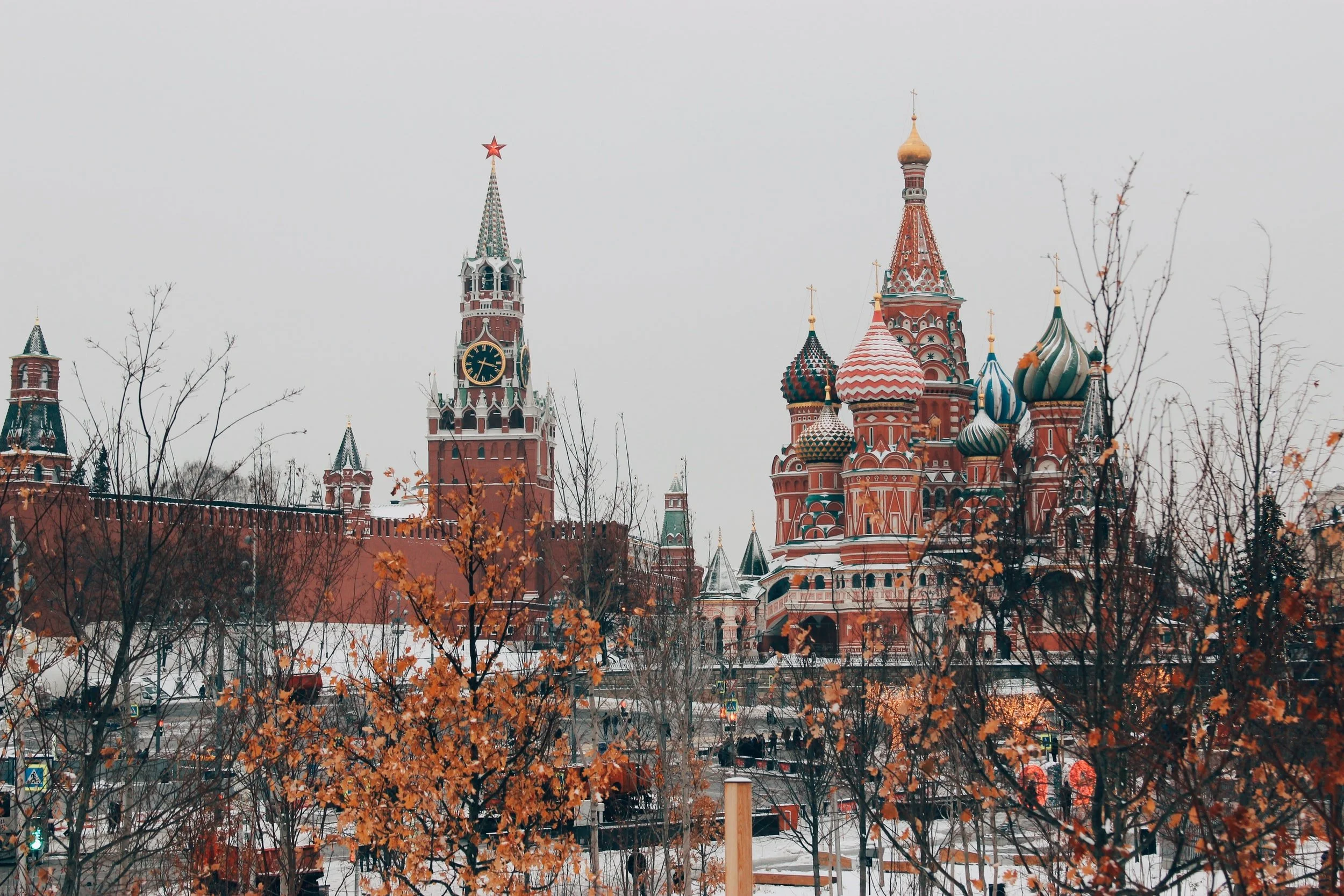
A new development joins the many twists and turns of Yukos v Russia, one of the largest commercial awards ever issued at USD 50 billion. Since it was rendered in 2014, Yukos has sought to enforce the award whilst Russia has sought to have it set aside. Most recently, the Dutch Supreme Court reviewed the State’s allegations of fraud and remanded the case to a lower Dutch court for it to review those claims. Readers will note that a Belgian court recently refused to enforce an award obtained by claimants against Kazakhstan due to findings of fraud.
Russia previously succeeded at setting the award aside in 2016 on the basis that it was never bound by the Energy Charter Treaty (ECT) before the award was reinstated in 2020. Whilst the Dutch Supreme Court decided to send the award to a lower court for review, it did not accede to Russia’s requests to refer the matter to the European Court of Justice or to hold that the ECT didn’t apply. Russia’s victory is therefore partial and the upcoming developments anything but clear. Stay tuned! (Russia v Yukos Universal and others, Dutch Supreme Court)

5. Space arbitration lifts off
Last month, we reported on a satellite dispute between Mexico and a French investor, indicating that we expected to see many more space-related disputes shortly. This month, the Space Arbitration Association was founded, mainly in response to the growing amount of commercial activity in the earth’s low orbit (between 300 to 2,000 km above the earth), including space tourism. Most satellites are also in low earth orbit. Other potential areas in which disputes may arise are telecommunications (closely linked to the aforementioned satellites), military activity, and space debris.
Activity in space is governed by International law, consisting of five key treaties, of which the 1967 Outer Space Treaty is the most important. Given our increase in space activity and space’s a-national nature, space disputes promise to be a fascinating area in years to come.
Did you know? ‘Space’ begins around 100 km above the earth.

6. English Arbitration Act to be reviewed
The Law Commission of England & Wales recently announced that it would review the Arbitration Act of 1996, which applies to arbitration seated in England, Wales, and Northern Ireland. As readers will be aware, London is a popular arbitration seat, meaning that the impact of any changes could be felt by parties across the globe. With the Act having reached the ripe old age of 25, the Commission feels that it may benefit from updates, notably as other jurisdictions around the world have been doing the same. The issues that may be reviewed include:
the power to summarily dismiss unmeritorious claims or defences in arbitration proceedings;
the courts’ powers exercisable in support of arbitration proceedings;
the procedure for challenging a jurisdiction award;
the availability of appeals on points of law;
the law concerning confidentiality and privacy in arbitration proceedings; and
electronic service of documents, electronic arbitration awards, and virtual hearings.

7. Bahrain – Iran saga partially resolved
Back in September 2021, we covered the ongoing disputes between Bahrain and Iran over the 2015 nuclear deal. Recently, a tribunal found Iran’s accusation that Bahrain had expropriated its Banking Venture in Bahrain by taking over and liquifying its assets were justified. The tribunal noted that another Iranian insurance company located in Bahrain was put in liquidation on the exact same day, something it found to be too much of a coincidence.
Just a few months before the actions in question were undertaken in 2015, Iran was in the process of entering into a deal to constrain its nuclear programme in return for certain economic sanctions on it being lifted. Saudi Arabia was strongly opposed to this and allegedly pressure Bahrain, which has a strong economic dependence on it, to cut ties with Iran. Bahrain, however, asserted that the Iranian banking venture was a Trojan horse intended to finance terrorism. The tribunal ultimately awarded Iran USD 200 million, although its claim for moral damages was unsuccessful. (Bank Melli and Saderat v Bahrain)

8. Claims against Spain continue
Months without new developments in relation to Spain’s ECT saga are rare. This month included a positive and a negative outcome for the European nation. Earlier in the month, a EUR 1.2 billion claim against Spain by a Luxembourg company, CSP Equity Investment, was thrown out by a SCC tribunal over lack of jurisdiction. The Luxembourg company had inherited rights against Spain from a Spanish company, Abengoa, when the dispute was already foreseeable, i.e., it was possible that the restructuring occurred to avoid the constraints of the ICSID Convention, which holds that the investor must be from another nation than the nation it is commencing proceedings against. Abengoa is now considering its options, which may include litigation in Spain. (CSP Equity Investment v Spain)
Meanwhile, Spain was ordered to pay Japanese JGC Holdings EUR 23.5 million over its frustration of the claimant’s legitimate expectations. This award could be said to be a minor victory for Spain, given that the investor initially sought EUR 161 million. Spain previously contested the tribunal’s jurisdiction following the Achmea award, despite the fact that it only applies within Europe. After the ECJ ruled that ISDS provisions in an EU – Canada agreement were compatible with EU law, Spain withdrew this objection. The award was ultimately rendered on the same basis as most other renewable energy awards against Spain: it drastically altered its renewable energy regime in the early 2010s and frustrated investors’ legitimate expectations. Why the final amount awarded was a mere 15% of the amount claimed is not readily apparent, as the award is not yet public. (JGC Holdings Corporation v Spain)
9. Vattenfall saga at an end
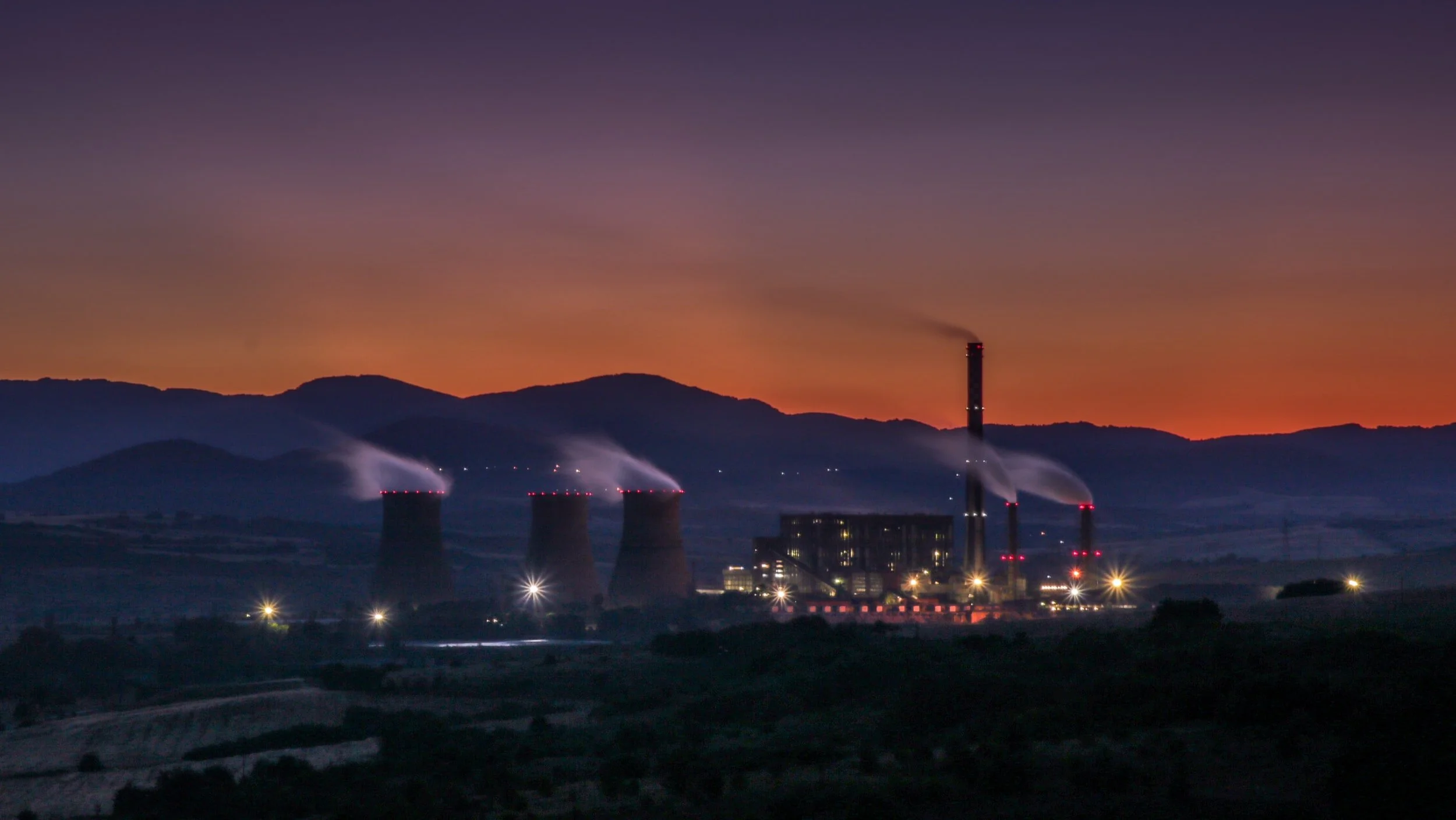
The books have closed on the decade-long Vattenfall proceedings between the eponymous Swedish power company and the German government. Whilst Vattenfall initially claimed EUR 8 billion in an ICSID arbitration following its failed investment in Germany, the dispute has now been settled for EUR 1.4 billion. This follows a new law issued by Germany in October 2021 which provides compensation to companies affected by Germany’s nuclear phase-out plan, first introduced in 2011 as a result of a nuclear accident in Japan. The accident gave Germany cause for concern, and it became the first ‘industrialised’ nation to phase out nuclear energy.
The decision is not surprising given that Germany reached provisional agreements with EnBW, E.ON, RWE, and Vattenfall earlier this year, which simply became official on 31 October. The decision is still interesting for a number of reasons. Nuclear energy is a controversial topic, seeing as some countries, such as the UK, see it as a suitable source of renewable energy, while others, including Germany, are desperately trying to see it out. This leads to the question of what kind of legitimate expectations investors may have when they invest in nuclear energy, even in countries currently favouring it? We will keep you posted.

10. Virtual reality leads to IRL arbitration
Anyone who has visited a TeamLab exhibition or any of the many virtual art installations (Monet’s paintings being projected on cave walls, for example), will be familiar with the beauty of virtual reality exhibitions. Things aren’t always so pretty behind the scenes, however. A US developer of virtual reality theme parks is attempting to enforce a JAMS award against a UK joint venture partner. In 2020, the US company, Immersive, co-founded by a two-time Academy Award winner, entered into an agreement for the UK company, Indigo, to contribute USD 45 million to the joint venture. It did not end up doing so, citing covid-related economic woes. After commencing proceedings, Immersive discovered that the banks with whom Indigo claimed to have ties did not even have a record of the company.
Whilst a sole arbitrator ordered Indigo to pay USD 45 million, it has not done so yet. An insider source states that the company does not have the millions to pay, let alone thousands. Indigo, meanwhile, claims that it’s so-called ‘agreement’ with Immersive was no more than a letter of intent. A fraud-related suit was commenced by Immersive previously but was halted due to its failure to serve it on Indigo’s directors time. We are curious to see how this develops. (Immersive Management Holdings v Indigo Dragon Group)