September 2021

1. Spain faces 50th investor-state claim
Spain was recently hit with its 50th claim from renewable energy investors over reforms instituted a decade ago. The claim in question was brought by a group of German entities for breaches under the Energy Charter Treaty. Most cases against Spain in this context arose over Spain’s failure to pay investors fixed prices under power purchase agreements.
Despite facing a slew of cases, Spain recently decided to introduce a new law that could see wind and solar power generators pay Spain back money in excess of market prices, including with retroactive effect, despite fixed prices agreed under long-term power purchase agreements. Some believe this new law may have been introduced following the Komstroy opinion (see below), as Spain may view Energy Charter Treaty claims by investors stemming from other European nations as unlikely to succeed. However, as many intra-EU BIT tribunals have upheld their jurisdiction even after Achmea, this is not at all guaranteed.

2. ICSID and UNCITRAL take aim at double-hatting
UNCITRAL and ICSID recently released the third draft of their code of conduct, which sets out new options for restricting double hatting, a growing problem in investment arbitration. It describes the practice whereby individuals act as both arbitrator and counsel (and/or expert witness) in parallel proceedings or in short consecutive order. The alleged issue with the practice is that it may prove difficult to come down hard on a party as an arbitrator where that arbitrator would like the party to appoint them as counsel in another case. You can find our in-depth analysis on double hatting here.
The first proposed solution is an all-encompassing complete ban, arguably appropriate in light of the so-called “legitimacy crisis” investment arbitration is facing, and in line with the solution proposed by Philippe Sands QC almost 20 years ago. A more moderate solution would only prohibit arbitrators from acting as counsel/expert in another investment case involving the same issues, parties, or treaty. The final option is so-called “full disclosure”, whereby adjudicators must reveal if they act as counsel/expert in another investment case involving the same issues, parties, or treaty, with either party then having an option to challenge. Proponents of this third option say that this would avoid a broad category of arbitrators being excluded and thus limit negative effects on diversity. They point out how detrimental a complete ban would be on those receiving their first arbitrator appointments, given that they are not yet in a position to give up (or even temporarily suspend) their work as counsel. However, given the scope for issues across the range of options, it seems that a compromise somewhere in the middle is most likely.

3. Growing number of climate change disputes expected
Given its position on the world stage in very recent years, it should come as no surprise that there are a growing number of disputes over climate change and environmental concerns. There are several ongoing trends, notably in relation to investment arbitration. Firstly, Governments might enter into agreements to attract renewable energy investors but fail to live up to the pricing guarantees offered, as was the case with Spain. Alternatively, Governments may take actions to phase out coal, oil, and gas, (and in some cases nuclear power), which may see them being sued by oil and gas companies with whom they have long term supply agreements. Furthermore, Governments or other parties may fail to go through with projects over environmental concerns - especially concerns that only arose after an agreement was entered into. This may be the case with Hydro Power, a renewable energy that is popular at the moment but which some feel may have negative long-term consequences. Given all these unknowns, it may additionally be difficult to determine what “legitimate expectations” cover, especially in relation to those who invest in “traditional” energy sources, knowing that this is slowly being phased out.
4. Komstroy: the ECT does not cover intra-EU disputes
In what seems to be one of the most reported decision since Enka v Chubb, the European Court of Justice recently held that the ECT doesn’t cover disputes between EU nations – that is – that investors of one EU nation cannot rely on its provisions in relation to their investments made in another. This decision has been awaited since the 2018 Achmea decision, in which it was held that EU nations couldn’t rely on bilateral investment treaties between them when issues arose. In both cases, the moral is the same: having a dispute between EU parties resolved through arbitration undermines the primacy of EU law as it gives tribunals rather than EU courts the ultimate say on the meaning of EU law.
In 2020, many EU states already signed an agreement to terminate intra-EU BITs. The consequences for the ECT were expected to be the same but were not entirely clear. As several states are facing billions in claims by EU investors under the ECT, many of them may be breathing a sigh of relief. In practice, however, tribunals may still uphold jurisdiction, notably where claims were instituted before the Komstroy decision was rendered. Given the potential repercussions of this decision, it is no surprise that it has received so much attention. It is worth reading a detailed analysis or two of this case in order to understand the (many) issues. We won’t be providing our own, given the number of excellent pieces out there already.

5. Ethiopia threatened over consequences of civil war
Since the end of 2020, Ethiopia has been embroiled in a bitter civil war. Greatly simplified, it commenced when the Tigray People’s Liberation Front, a powerful political force in Ethiopia for the past several decades, refused to join a new coalition and accused the current leader, Abiy Ahmed, as having obtained power illegitimately. Since then, forces from the south have entered the northern Tigray region, with both sides of the dispute having been accused of extrajudicial killings and perpetuating war crimes.
Two Egyptian companies, one a power transformer maker and the other an office furniture manufacturer, have now threatened to file a USD 40 million treaty claim against the nation. Both companies used factories in the northern Tigray region, which stopped production shortly after the fighting broke out.
It will be interesting to see how these claims develop, given the difficult situation Ethiopia finds itself in. It will also be interesting to see whether any other investors will follow suit, given the extent of investment in Africa’s second-most populous nation. This possibility is especially potent as Tigray is Ethiopia’s main industrial zone.
6. Convictions over “fake” arbitration in Switzerland
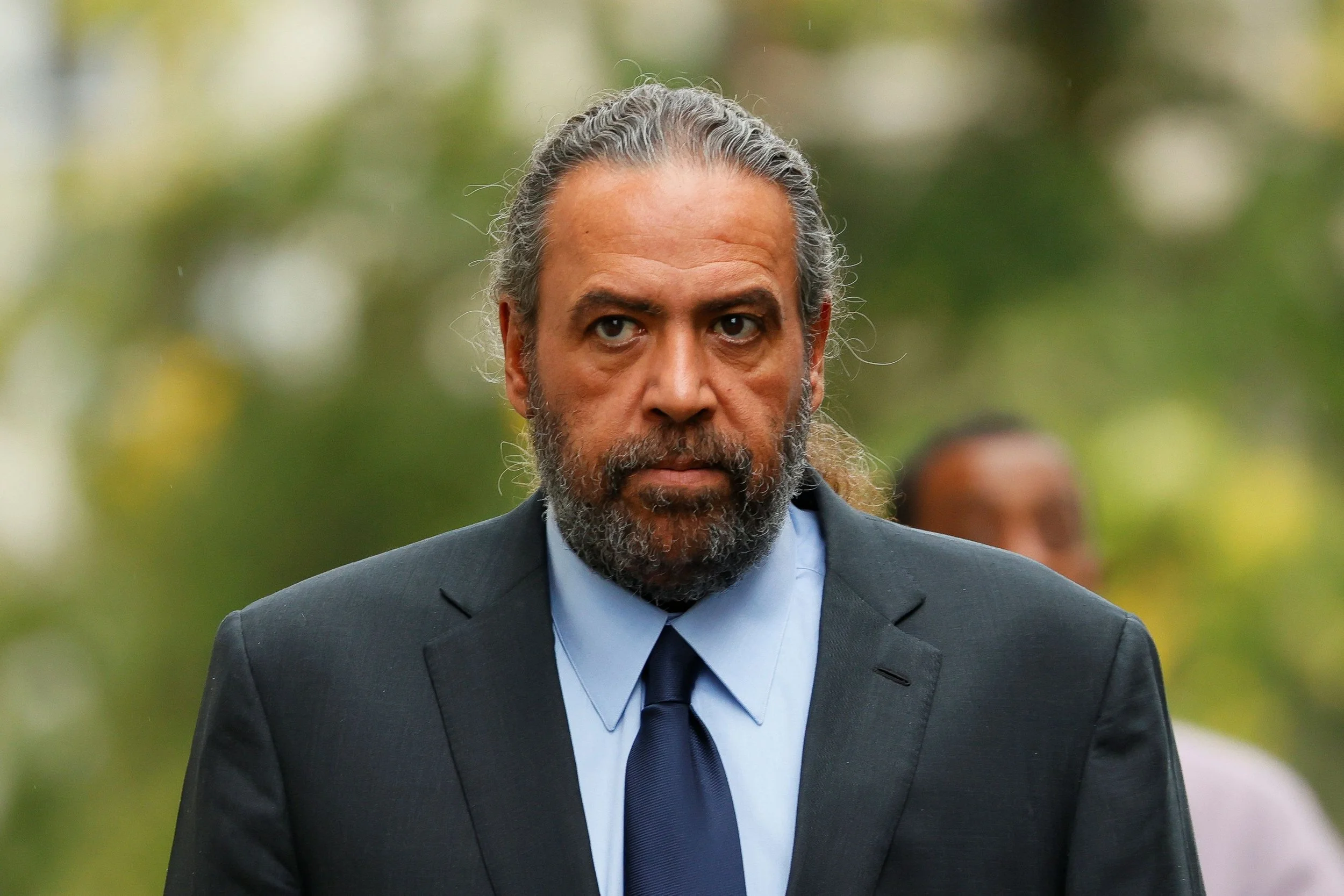
A Kuwaiti sheikh and his British lawyer are among those sentenced to prison after being found guilty of forgery by a Swiss criminal court over their role in a “fake” arbitration.
Sheikh Ahmad al-Fahad al-Sabah is a prominent international sports official, having led the Olympic Council of Asia for over 30 years, and having been on the FIFA council until 2007, when he resigned over allegations of impropriety.
The “fake” arbitration was allegedly orchestrated in an attempt to discredit the sheikh’s political rivals in Kuwait. The “arbitration” in question concerned video footage of two senior Kuwaiti officials discussing a coup plot. Such a plot counts as treason, for which individuals can be executed in Kuwait. The sheikh had submitted this footage to Kuwaiti authorities together with a 2014 arbitral award which purported to authenticate the video. As it turns out, however, the award was drafted by the sheikh’s British lawyer, whilst a Geneva-based lawyer was paid USD 11,000 to sign the award as an arbitrator.

7. Issues of space: Mexico wins satellite claim
Mexico recently defeated a USD 120 million treaty claim by French investor Eutelsat over Mexico’s “reservation of satellite capacity”. Eutelsat originally invested in Mexico in 2014 when it acquired Satmex, an operator of several satellites providing coverage to much of the Americas, for USD 831 million. Mexico required Satmex to reserve some capacity for Mexico to use, which Eutelsat argued operated as a tax. It also took issue with the fact that it was allegedly required to provide larger reservations than its competitors. The parties had allegedly entered into discussions that the reserve would be reduced, but nothing was confirmed in writing. As such, the Tribunal held that no treaty breaches had occurred. Whilst the case is not that remarkable on its facts, it’s the issue of space operations and satellite ownership that are intriguing. In future, we expect to see further disputes about ownership of (items in) the skies and beyond!

8. Repercussions of the 2016 Turkish coup continue
A Tribunal recently threw out a claim by a Belgian entity over the alleged expropriation of a real estate and media distribution group linked to Fetullah Gülen, Cihan Medya Dağıtım (CMD). CMD was taken over by an organ of the Turkish state back in 2016, as it was the distributor of the opposition newspaper and was accused of being linked to Gülen.
Turkey alleges that Gülen and his supporters were behind the failed coup in 2016. This case is one of several involving the repercussions of the coup. Several dozen companies were nationalised amid allegations of links to Gülen, at least a few of which have launched high-value proceedings against Turkey.

9. Cambodia faces first ever treaty claim
There’s a first time for everything. Cambodia recently faced its first reported treaty claim from none other than China, the nation’s largest foreign investor. The ICSID claim under the 2009 AEAN-China Investment Agreement was brought over Cambodia’s revocation of several telecom operators’ licences, including several at which the claimants were directors. The operators in question were allegedly operationally inactive and did not comply with obligations under their licences, such as revenue shares.
Investment in Cambodia (both foreign and local) has grown significantly recently, doubling between 2015 and 2019 (the most recent year for which there is available data), when it was at USD 9.4 billion. Despite this growth, the relatively low overall amounts do not make it surprising that Cambodia never faced a treaty claim before, statistically speaking. The fact that the claim was launched by China is even less surprising, given that it generally accounts for half of Cambodia’s total investments in a given year.

10. Billion-dollar pharma fraud claim
A US pharmaceutical company scored a win at the biggest case ever heard at Belgian arbitral institution CEPANI, which concerned alleged fraud perpetrated during its USD 4.3 billion acquisition of Belgian health products provider Omega. Apparently, the Dutch and Belgian sellers of the company deliberately concealed important information concerning Omega’s finances and later breached their warranties, all of which led the US firm, Perrigo, to lose USD 2.32 billion. Perrigo’s USD 412 million win will come as welcome news to the New York-listed company, whose directors are facing a class action by shareholders over a large drop in its share price following inadequate disclosure of issues surrounding the Omega takeover.